
 Village Connect
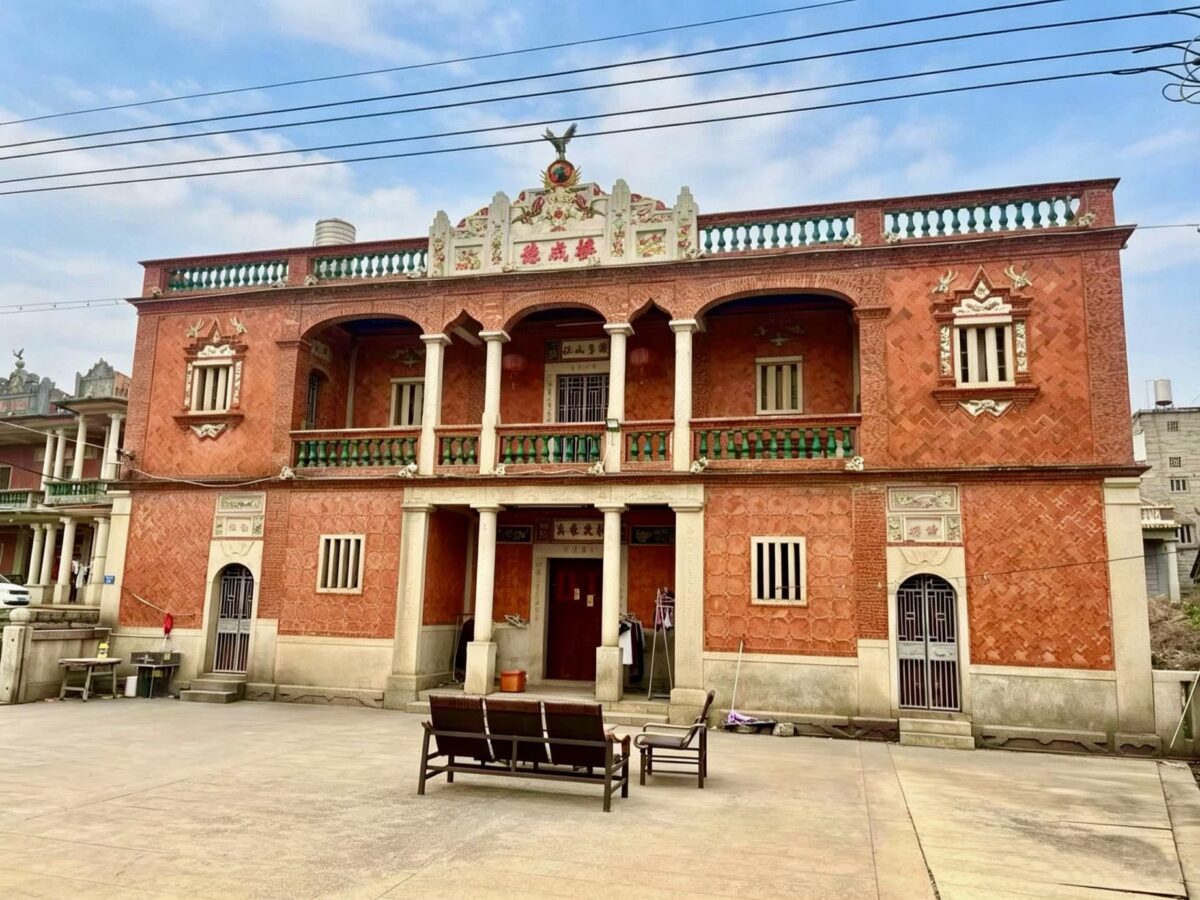
Long before the Sy family became known for building one of the Philippines’ largest business empires, their story began in a modest village in Fujian, China. Today, that chapter of their history continues to live on through the De Cheng Building, the ancestral home of SM founder Henry Sy, Sr., in Hongxi Village, Jinjiang.
Situated along Sanxing Road in Longhu Town, the two-story residence stands as a reminder of the family’s origins and the values that shaped future generations. The house was built between 1952 and 1953 for Henry Sy Sr.‘s parents, Sy Siu Tek and Tan O Sia, after they returned to China. It predates the establishment of the first Shoemart store in Manila by five years, making it a silent witness to the family’s life before their remarkable business success.

Covering approximately 450 square meters, the De Cheng Building reflects the distinctive Minnan Fan Zai Lou architectural style, a blend of traditional southern Fujian design and Western influences commonly seen in homes built by overseas Chinese families returning to their homeland. Constructed from brick, timber, and stone, the residence showcases a harmonious balance between cultural heritage and modern ideas of its time.
The home’s thoughtful design emphasizes both beauty and functionality. Wide corridors running east to west encourage natural ventilation and daylight throughout the structure, while balconies and open spaces create a welcoming atmosphere. The second-floor hall opens onto an outdoor balcony that overlooks the property, offering expansive views of the surrounding village.
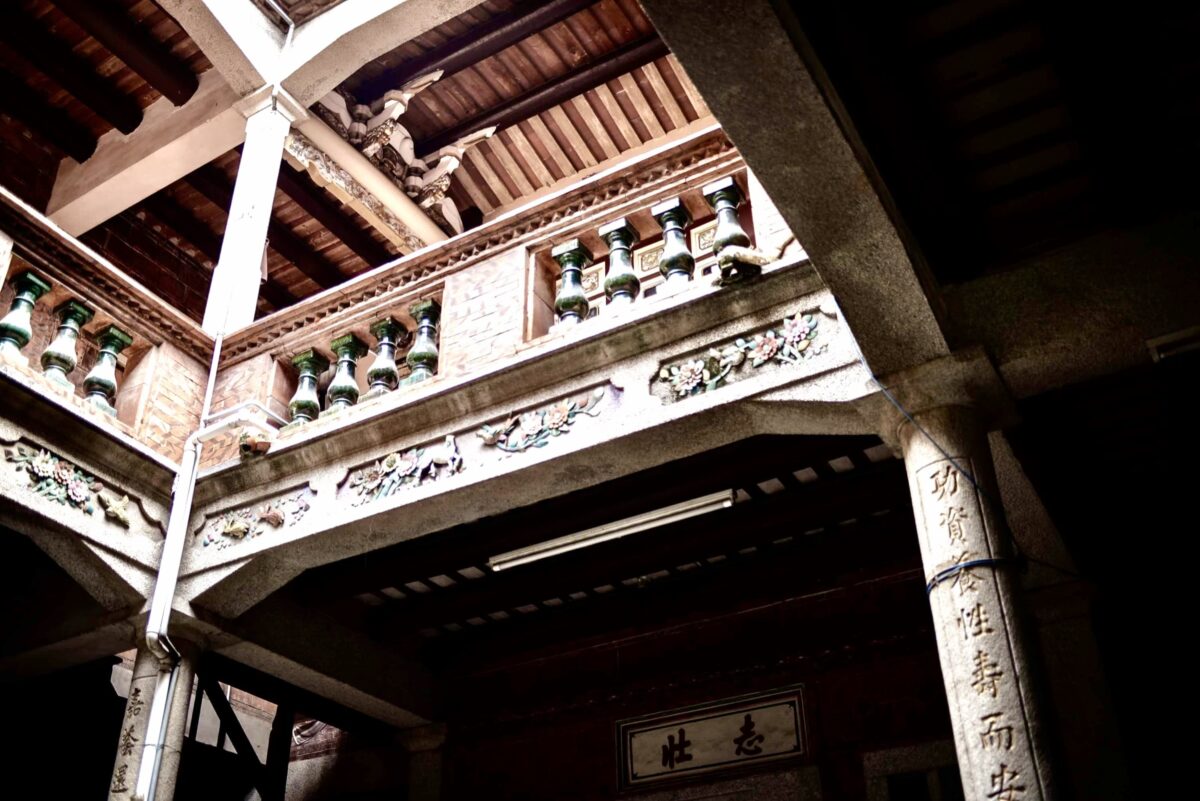
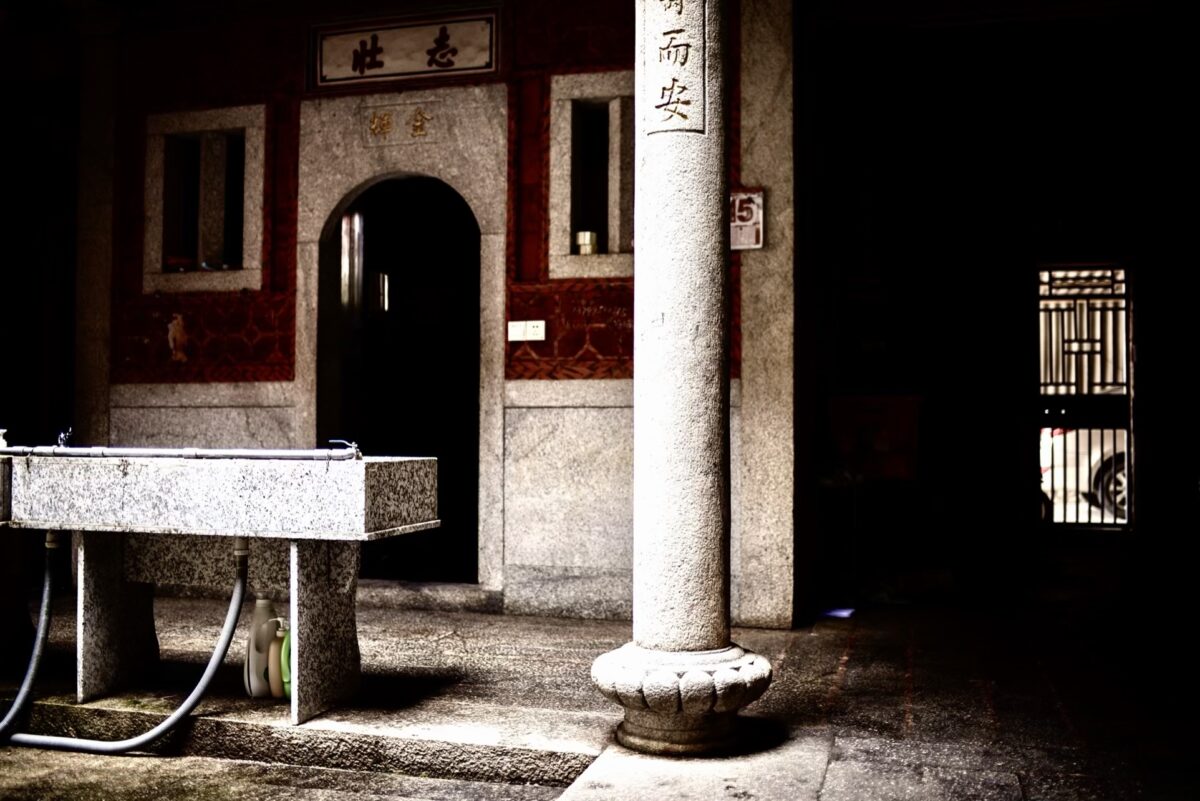
Its architectural details reveal exceptional craftsmanship. The lower walls are adorned with finely carved white stone, contrasting elegantly with the red brick upper façade. Decorative stone columns frame the entrance, while floral clay sculptures and engraved plaques enhance the porch with traditional artistry.
One of the building’s most striking features is its use of Qianci, an age-old decorative technique that arranges colorful porcelain fragments into intricate floral and bird motifs. These embellishments can be found on the gables, window frames, and side gates, highlighting the region’s rich artistic traditions. A granite-paved courtyard enclosed by a boundary wall further adds to the home’s timeless appeal.
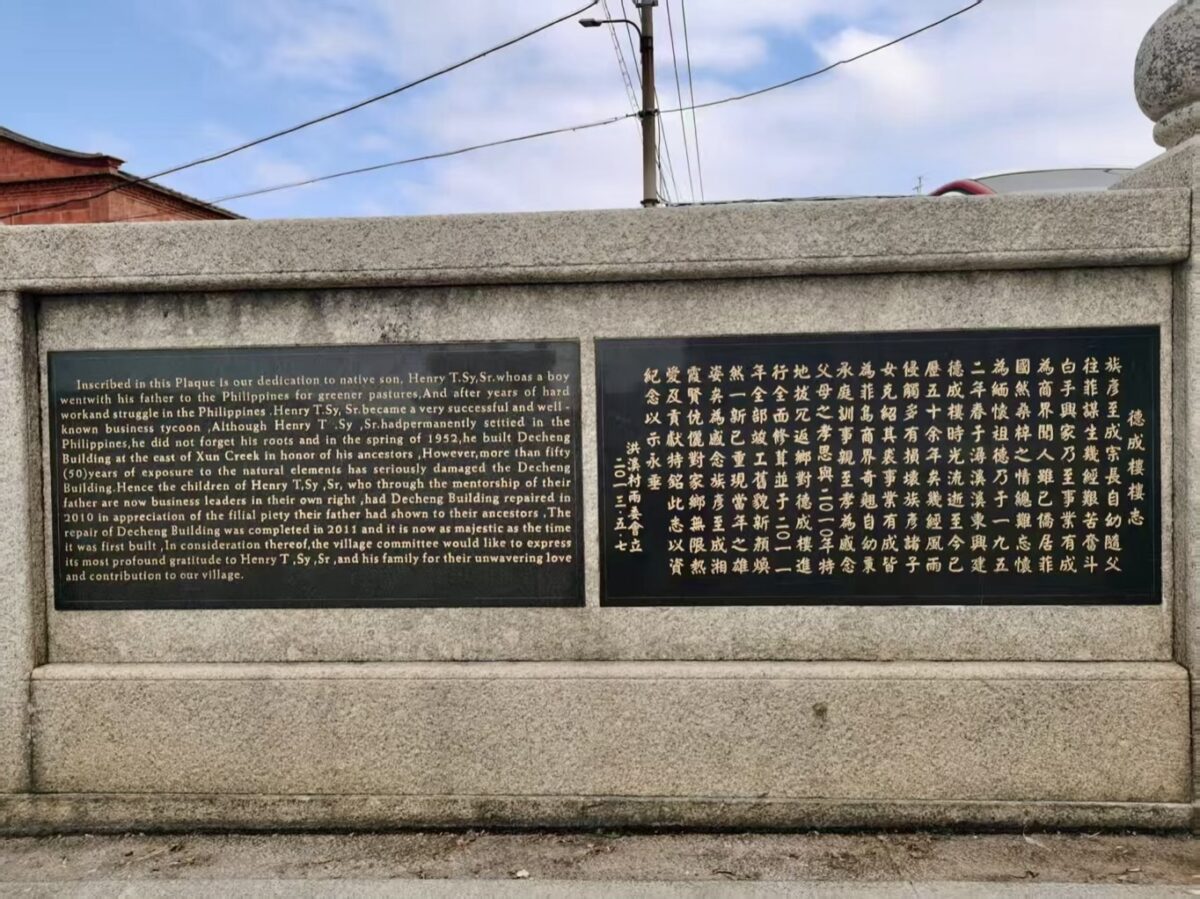
Although the Sy family no longer resides in the house, the property continues to hold deep personal and historical significance. Recognizing its importance, Henry Sy Sr. returned to Hongxi Village in 2010 to initiate restoration efforts aimed at preserving the ancestral home. Renovation work was completed the following year, and in 2013 the village committee installed a commemorative stone marker recounting the building’s history.
The family’s connection to their roots remained evident in June 2019, when more than 30 members of the Sy family visited Hongxi Village to honor their ancestors and reconnect with their heritage. Since then, preservation efforts have continued, including waterproofing improvements in 2019 and restoration of the retaining wall, plaza, and termite-control treatments completed in 2025.
Today, the De Cheng Building stands as more than a well-preserved historic residence. It symbolizes the enduring bond between generations, preserving the Sy family’s cultural heritage while serving as a lasting reminder that even the greatest success stories begin with humble roots.


Loading…