
 Village Connect
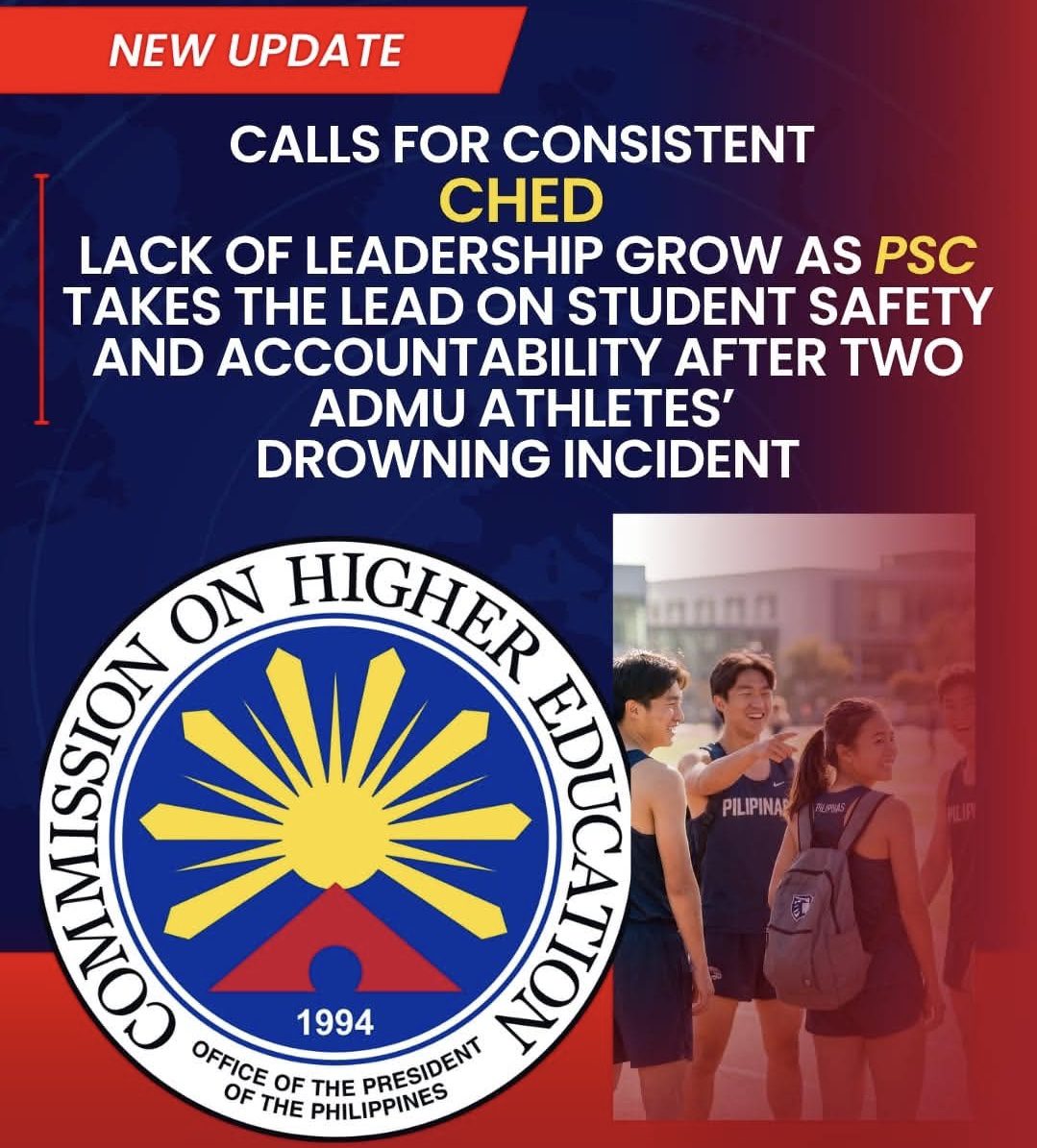
The tragic drowning of two student-athletes from Ateneo de Manila University during a school-related activity has reignited a wider conversation about accountability, student safety, and the role of government agencies tasked with overseeing higher education institutions.
While investigations into the incident continue, education stakeholders are increasingly asking whether the Commission on Higher Education (CHED) is providing the leadership expected of an agency responsible for regulating colleges and universities across the country.
The discussion gained momentum after the Philippine Sports Commission moved to examine the circumstances surrounding the tragedy and assess concerns related to athlete welfare and institutional responsibility. For many observers, the PSC’s visible response highlighted what they perceived as a lack of urgency from CHED, despite the agency’s direct mandate over higher education institutions.
The incident has prompted comparisons with previous cases in which universities and officials were subjected to sanctions for violations involving student activities and safety protocols.
During the height of the COVID-19 pandemic, both University of Santo Tomas and National University faced penalties after sports teams conducted training activities that allegedly violated restrictions imposed under government health protocols. Although those incidents did not result in fatalities or serious injuries, disciplinary actions were imposed because institutions were found to have breached existing regulations governing student-athlete activities.
For some stakeholders, these earlier cases demonstrated that authorities were willing to act when compliance issues arose. They now question whether the same standards are being applied in situations involving far more serious consequences.
Attention has also turned to another widely remembered case involving Dr. Cecilia Gascon, who was removed from office following the Madlum River tragedy in Bulacan. The incident claimed the lives of seven students participating in a school activity and led to findings that safety measures and risk assessments were insufficient. The case became one of the most prominent examples of institutional accountability being enforced after a student-related disaster.
Observers note that these precedents established clear expectations regarding responsibility when student welfare is compromised. As a result, questions are now being raised about whether similar principles are being consistently applied across all institutions and circumstances.
Beyond the current tragedy, education advocates emphasize that the issue extends to the broader responsibility of ensuring that schools maintain effective risk management systems, proper supervision, and compliance with safety standards during activities conducted outside the classroom.
For many in the education sector, the central concern is not merely determining what happened, but ensuring that lessons are learned and accountability mechanisms remain credible. They argue that students and parents place their trust in educational institutions to provide both quality learning and a secure environment where risks are carefully managed.
As public attention remains focused on the case, stakeholders say CHED’s response will be closely watched. Whether through investigation, policy review, or public guidance, they believe the agency has an opportunity to demonstrate leadership and reaffirm its commitment to protecting students.
Ultimately, many argue that accountability, transparency, and decisive action are essential not only for addressing a single incident but also for strengthening public confidence in the institutions responsible for safeguarding the welfare of young Filipinos.



Loading…