
 Village Connect
On any ordinary day, millions of Filipinos move through busways, terminals, ports, and airports—often without thinking about how quickly an emergency can change a routine trip. Behind the scenes, however, a quiet mission is growing to make every journey safer.
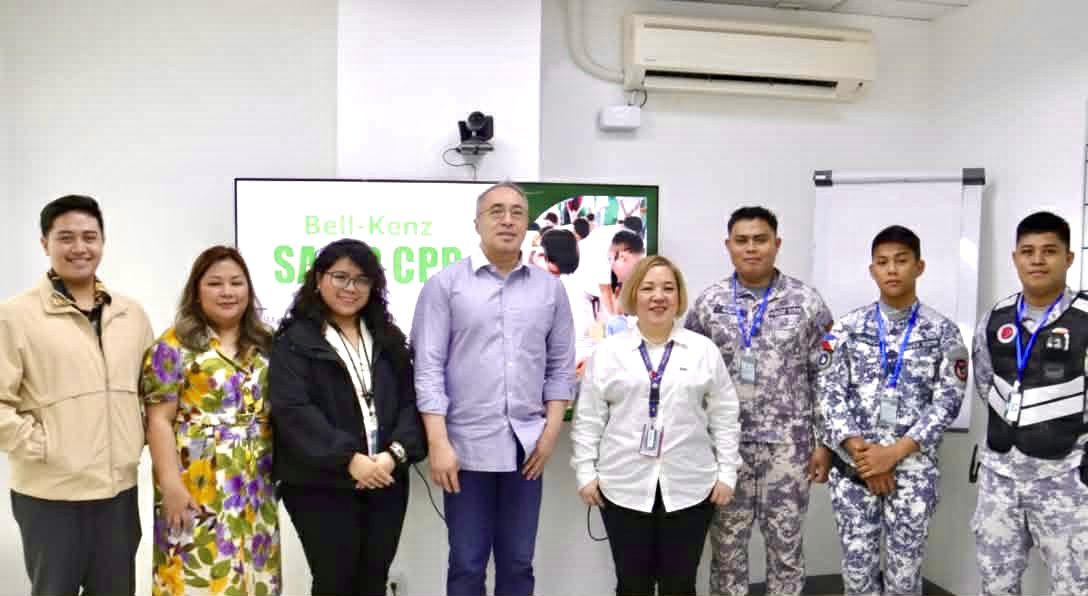
Bell-Kenz Pharma is strengthening its Sagip CPR advocacy by teaming up with the Department of Transportation’s Special Action and Intelligence Committee for Transportation (DOTr-SAICT). The goal is simple but powerful: train one million Filipinos in life-saving skills, starting with the people who stand at the frontlines of daily travel.
By integrating Sagip CPR into the DOTr’s road safety program, Oplan Biyaheng Ayos, the partnership ensures that help is always close by. Officers, enforcers, and port and terminal staff are often the first to respond when a commuter collapses, faints, or shows signs of cardiac distress. With proper CPR training, those first few minutes—often the difference between life and death—can be used effectively.
For SAICT, the need is real and constant. Medical emergencies happen regularly in crowded public spaces. According to Supervising Transportation Regulation Officer Anna Leah Morales, officers encounter suspected cardiac cases around twice a month in busways, overpasses, and terminals. Many of these situations happen before medical teams can arrive, placing huge responsibility on frontline personnel.
The first phase of the campaign focuses on the 400-strong SAICT enforcement team, who work in rotating shifts to monitor safety around the clock. These officers will receive CPR certification, turning their role from traffic and transport enforcers into potential lifesavers.
For Bell-Kenz Pharma, this is about meeting people where they are. Corporate Branding and PR Head Patrick Larraga explains that to build a nation of lifesavers, training must begin in places where people gather most—transport hubs, roads, and terminals. With DOTr’s wide network, Sagip CPR can reach millions not through classrooms, but through real-world spaces where emergencies actually happen.
The rollout will happen in phases. It begins in Metro Manila, where commuter volume is highest. After SAICT and Coast Guard personnel, training will expand to major bus operators and terminal staff. From there, the program will gradually move to other regions, covering more transport hubs across the country.
Each trained officer, driver, or terminal worker becomes part of a growing safety net—one that travels with every commuter, every day. With Sagip CPR on the move, every stop, station, and street becomes a place where help is never too far away.


Loading…