
 Village Connect
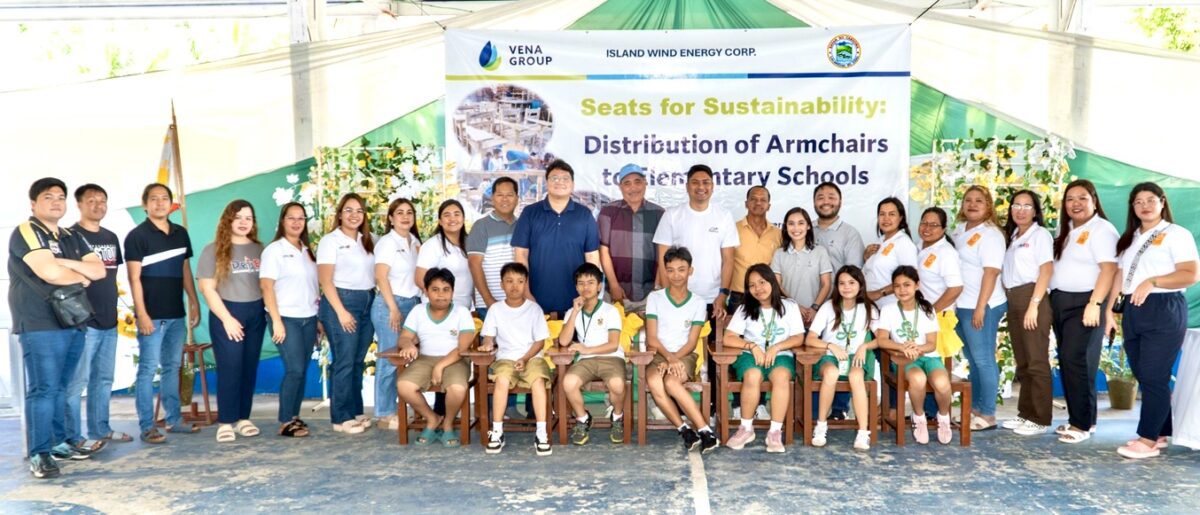
On Talim Island, where schools often contend with distance, limited resources, and logistical constraints, a simple classroom essential has become a symbol of shared progress. Through its “Seats for Sustainability” initiative, Vena Energy has turned over 1,000 handcrafted armchairs to public elementary schools in the municipalities of Binangonan and Cardona—strengthening education while creating meaningful livelihood for local families.
Implemented through its subsidiary Island Wind Energy Corp., the project goes beyond donation. It reflects a deliberate effort to link learning, skills development, and community empowerment into one sustainable cycle. The chairs were formally handed over during ceremonies held on January 22 at the Kasile Covered Court in Binangonan and January 23 at the Lambac Covered Court in Cardona, benefiting Kasile, Bombong, Kinagatan, and Lambac Elementary Schools.
For students on Talim Island, access to durable, DepEd-compliant school furniture is not always guaranteed. Transporting materials to island communities can be costly and complex, often delaying improvements to basic learning facilities. By addressing this gap, the initiative directly enhances classroom comfort and supports a more conducive learning environment—helping students focus, participate, and thrive.
What makes “Seats for Sustainability” distinctive, however, is how the chairs were made. Instead of outsourcing production, Vena Energy worked with the community itself. Local residents underwent carpentry and craftsmanship training facilitated by Technical Education and Skills Development Authority. After completing the program, they were engaged to build the armchairs, turning newly acquired skills into income-generating work.
This approach ensured quality while embedding economic benefits within the host community. Fathers, neighbors, and local workers became active contributors to their children’s education—crafting furniture that would be used daily in the very schools their families attend.
The initiative reflects Vena Energy’s broader commitment to education, infrastructure, and community well-being. According to Samrinder Nehria, the project embodies the company’s belief that sustainability begins when communities are empowered to shape their own future. The chairs, he noted, represent more than seating—they carry pride, resilience, and shared responsibility.
Joined by local government officials, school leaders, and residents, the turnover marked a moment where clean energy values translated into social impact—proving that when solutions are built with communities, they last far beyond the classroom.



Loading…