
 Village Connect
For many Filipinos, owning a home remains one of life’s biggest goals. Yet turning that dream into reality involves more than finding the right property. Buyers must understand how much they can afford, what financing options are available, which developments qualify, and what requirements they need to prepare.
A new collaboration between SM Development Corporation (SMDC) and the Home Development Mutual Fund, or Pag-IBIG Fund, aims to make that journey easier to understand.
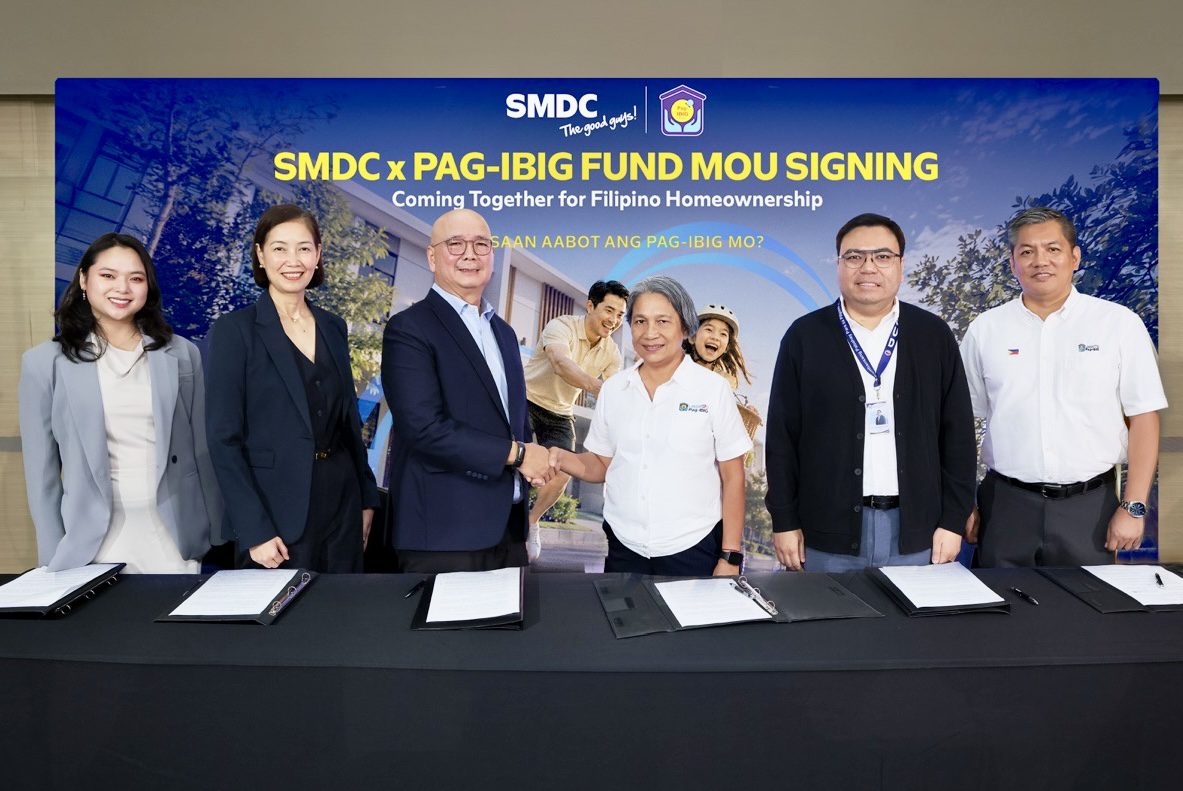
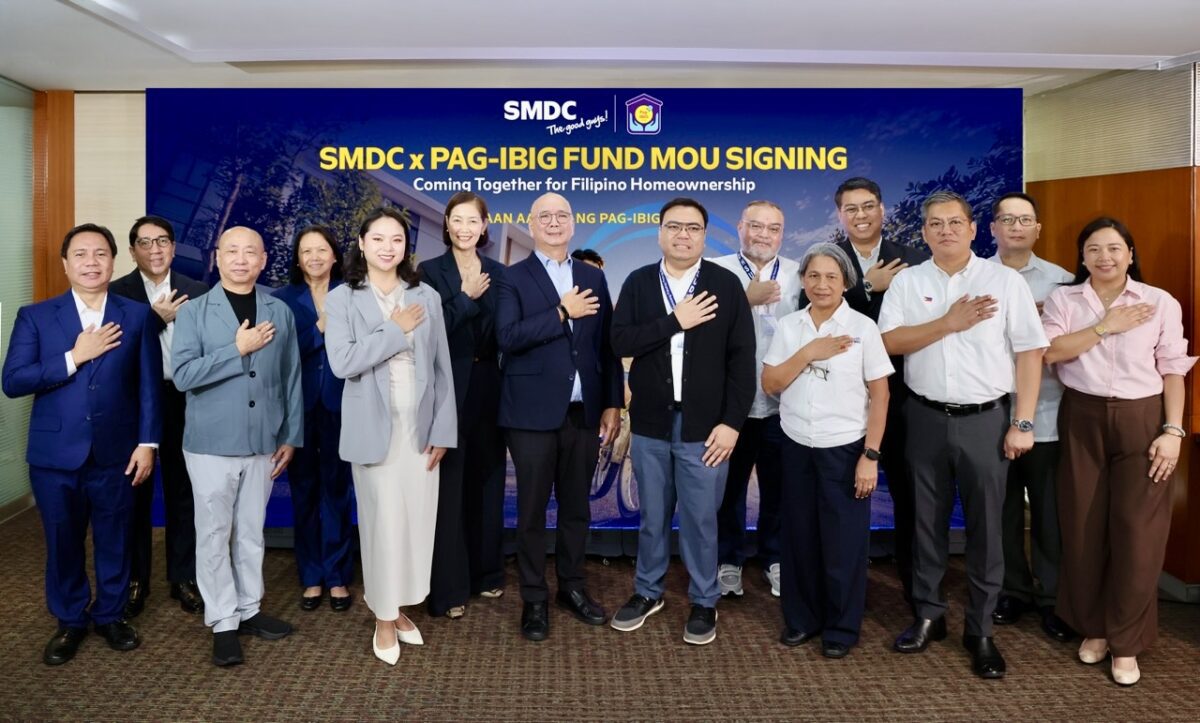
SMDC and Pag-IBIG Fund signed a Memorandum of Understanding (MOU) on September 8, strengthening cooperation on homebuyer education, seller preparation, initial buyer assistance, and future programs designed to help more Filipinos explore homeownership.
The partnership comes as Pag-IBIG Fund has increased its maximum housing loan amount to ₱10 million for qualified borrowers, opening more possibilities for members looking for homes that suit their location, lifestyle, family needs, and financial capacity.
Under the collaboration, buyers can explore selected Pag-IBIG-accredited SMDC developments while receiving clearer guidance on the initial steps involved in applying for financing.
Among the SMDC properties currently available for Pag-IBIG financing are Coast Residences in Pasay City, Spring Residences in Parañaque City, Hill Residences in Quezon City, and SMDC Cheerful Homes 1 and 2 in Pampanga. Additional developments in Makati, Mandaluyong, and Pasay are undergoing accreditation.

The partnership recognizes that every homebuyer has different priorities. Young professionals may prefer homes closer to their workplaces, while growing families may look for additional space and convenient access to schools and essential services. Overseas Filipino workers, meanwhile, may see homeownership as the result of years of working and saving for their families.
“My father has always believed in building a nation of homeowners,” said Jessica Sy, SMDC Vice President and Head of Design, Innovation and Strategy. She noted that a home provides families with stability, belonging, and something lasting that can be passed on to future generations.

The initiative also supports broader government efforts to increase private-sector participation in housing.
DHSUD Secretary Jose Ramon P. Aliling, who chairs the Pag-IBIG Board of Trustees, said collaboration between government and private developers is important in creating housing choices that match the needs and budgets of Filipino workers.
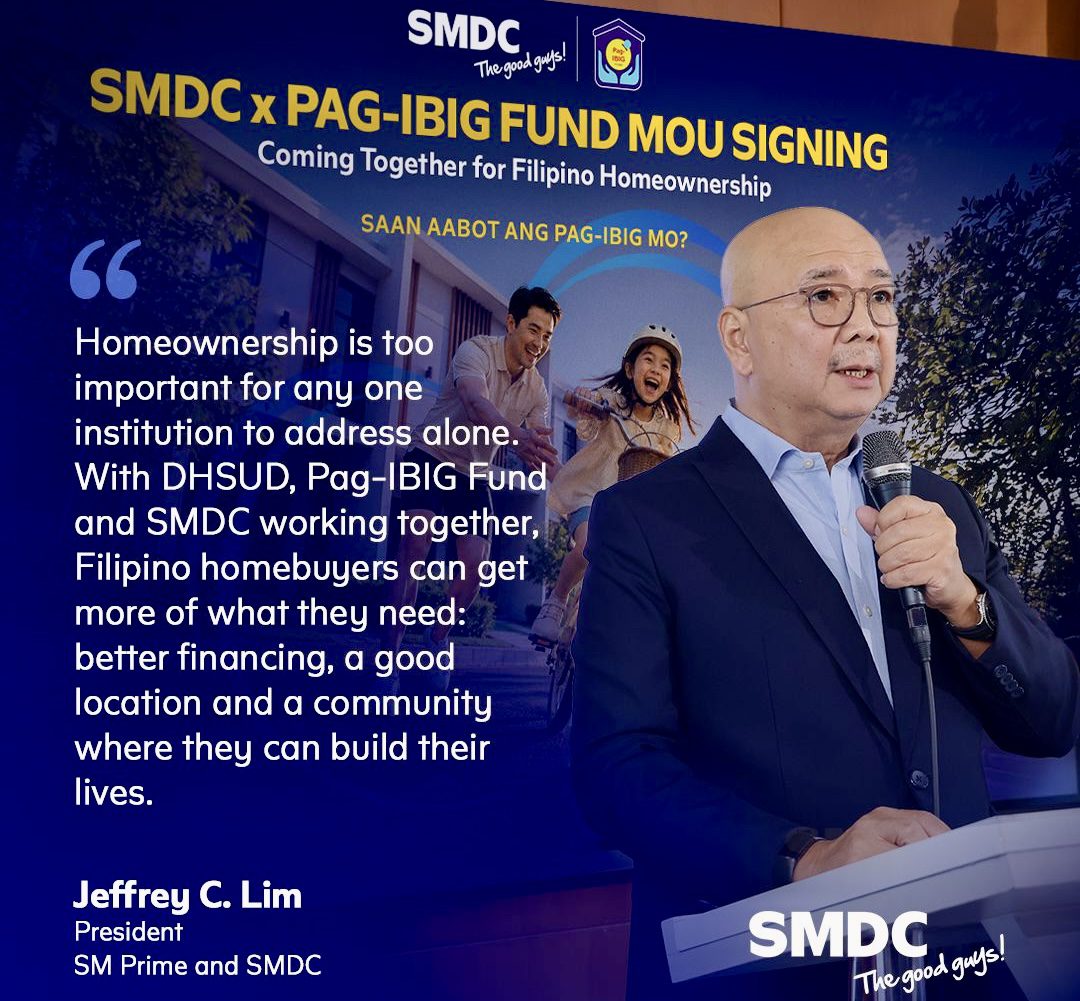
Jeffrey C. Lim, President of SM Prime and SM Development Corporation, likewise emphasized that addressing homeownership requires cooperation among institutions. Government can help provide accessible financing, while developers are responsible for creating communities that offer value, accessibility, and suitable living spaces.

An important part of the MOU is homebuyer education.
SMDC is preparing its sellers to handle initial questions regarding Pag-IBIG financing and developing frequently asked questions to help prospective buyers understand participating projects, basic requirements, and their next steps.
A dedicated help desk has also been established where prospective homeowners can inquire about eligible developments, request indicative computations, and learn about documents they may need.
Final borrower eligibility, property appraisal, approved loan amounts, and financing decisions remain under Pag-IBIG Fund and are determined according to income, capacity to pay, and applicable program guidelines.
Pag-IBIG Fund CEO Marilene C. Acosta said affordable financing becomes more meaningful when members also have suitable homes from which to choose.
Qualified Pag-IBIG members may borrow up to ₱10 million, with repayment periods reaching 30 years. Eligible socialized housing borrowers may access a subsidized 3% rate, while promotional rates are also available for qualifying loans until December 31, 2026.
The partnership is also expected to reach Filipinos beyond traditional sales locations. SMDC is preparing housing caravans and roadshows in selected areas in the Philippines and overseas, giving OFWs opportunities to learn about accredited properties and financing options even while working abroad.
For families asking how far their years of saving and Pag-IBIG membership can take them, this collaboration hopes to provide a clearer answer—and perhaps a clearer path toward finally having a home of their own.



Loading…