
 Village Connect
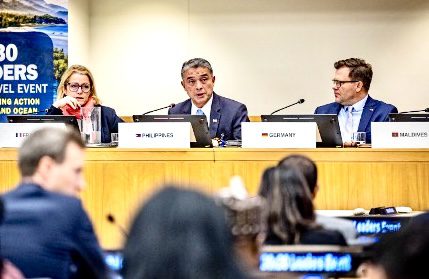
DENR Secretary Juan Miguel “Mitch” Cuna calls for greater international cooperation and financial support to protect natural ecosystems and strengthen climate resilience.
MANILA, Philippines — As biodiversity loss and climate change continue to threaten communities worldwide, the Philippines is calling on the international community to turn environmental commitments into meaningful action through stronger financing, technological assistance, and cooperation among nations.
Department of Environment and Natural Resources (DENR) Secretary Atty. Juan Miguel “Mitch” Cuna delivered this message during the 81st United Nations General Assembly (UNGA) Leaders Event for Nature and People, reaffirming the country’s commitment to protecting its rich natural resources while addressing the growing challenges facing developing economies.
Speaking before international leaders, Cuna emphasized that biodiversity conservation goes beyond protecting forests, oceans, and wildlife. For the Philippines, preserving ecosystems is essential to securing food supplies, protecting water resources, sustaining livelihoods, and building resilience against climate-related disasters.
“The Philippines strongly reaffirms its commitment to the 30×30 target under the Kunming-Montreal Global Biodiversity Framework,” Cuna declared.
The global initiative seeks to conserve at least 30 percent of the world’s terrestrial and marine environments by 2030, recognizing the critical role of healthy ecosystems in sustaining life and economic development.
As one of the world’s megadiverse countries, the Philippines faces significant responsibility in preserving its extraordinary biodiversity while balancing development priorities.
Through the Philippine Biodiversity Strategy and Action Plan, the government aims to protect 24 percent of terrestrial areas and 16 percent of coastal and marine ecosystems by 2040.
Currently, the country has 121 legislated protected areas covering more than 4.5 million hectares, reflecting continuing efforts to safeguard environmentally significant landscapes and habitats.
However, Cuna stressed that successful conservation should not be measured solely by the size of protected territories.
“For us, 30×30 is not simply about increasing the number of hectares on paper,” he explained, emphasizing effective management, ecological representation, and inclusive participation.
The environment chief also highlighted the importance of Indigenous Peoples in protecting biodiversity. Through the Indigenous Peoples’ Biodiversity Strategy and Action Plan, traditional knowledge, community participation, and Indigenous rights are being incorporated into conservation policies.
Despite these initiatives, financing remains a major obstacle.
Increasing population pressures, expanding settlements, agricultural demands, and the transition toward renewable energy continue to place additional strain on natural ecosystems.
To address these challenges, the Philippines is pursuing innovative financing approaches, including natural capital accounting and Payment for Ecosystem Services, to encourage sustainable public and private investments.
Globally, conservation efforts remain below the 30×30 target, with protected areas covering approximately 17.16 percent of terrestrial environments and 9.8 percent of marine ecosystems, according to figures cited during the event.
The World Economic Forum’s Global Risks Report 2026 also identified biodiversity loss as the second-highest global risk over the next decade, highlighting the urgency of coordinated international action.
Looking toward the upcoming Convention on Biological Diversity COP17 summit, Cuna urged developed nations and international institutions to expand financial assistance, technology transfers, and capacity-building programs for developing countries.
The high-level gathering, co-hosted by several countries and the High Ambition Coalition for Nature and People, provided a platform for strengthening global conservation commitments.
For the Philippines, the message remains clear: protecting biodiversity requires not only ambitious environmental targets but also sustained investment, inclusive policies, and shared international responsibility.
As Cuna emphasized, stronger global cooperation will be essential to preserving the natural ecosystems upon which future generations depend.

Loading…