
 Village Connect
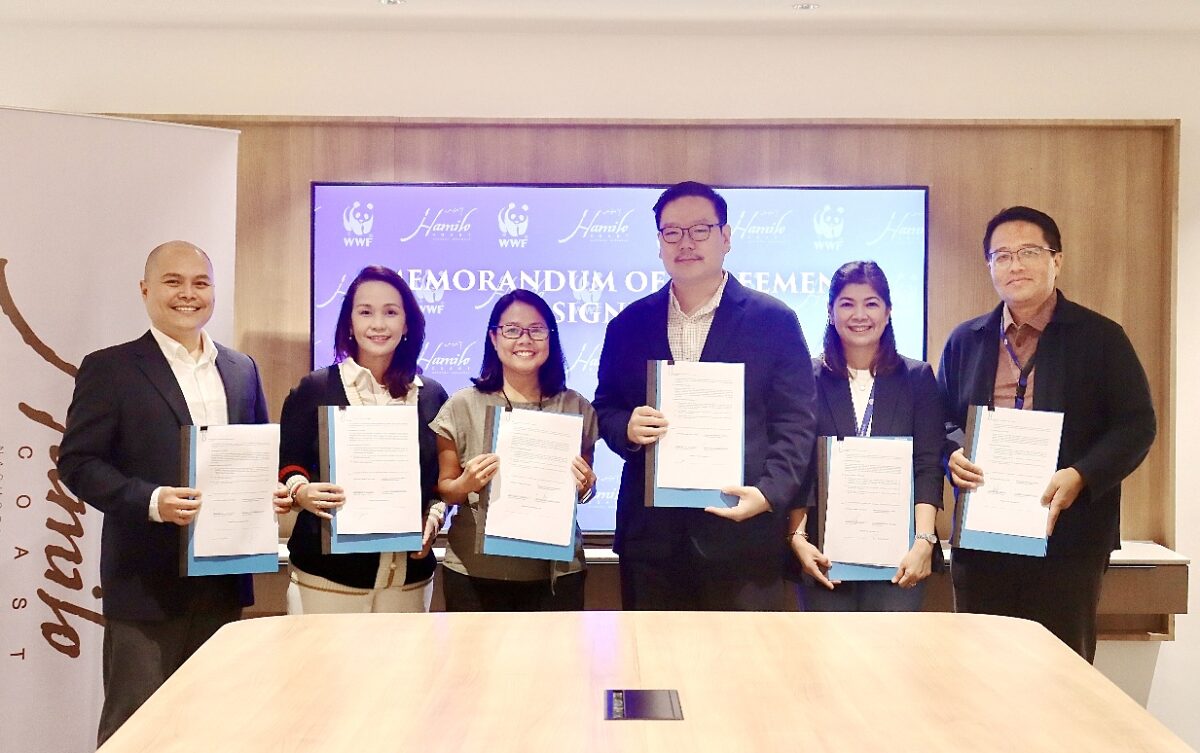
Nearly two decades of environmental collaboration will continue at Hamilo Coast as Costa Del Hamilo Inc. (CDHI), the leisure resort residences developer of SM Prime Holdings, Inc., renews its partnership with WWF-Philippines to further protect the marine ecosystems of Nasugbu, Batangas.
The renewed agreement begins the fifth phase of the Hamilo Coast Sustainable Development Project, an environmental initiative launched in 2007. This latest chapter will place greater emphasis on marine conservation, scientific monitoring, and sustainable coastal resource management to help guide the long-term protection of Hamilo Coast and its Marine Protected Areas.
Among the planned activities are marine assessment surveys covering Etayo Cove, Pico Cove, and Santelmo Cove. A site selection survey will also examine Pico de Loro Cove to determine whether the area is ecologically suitable for a potential artificial coral reef initiative.
Beyond scientific research, the program will strengthen environmental awareness through Education for Sustainable Development sessions. CDHI personnel, property owners, members, and guests will be engaged in discussions and activities focusing on marine conservation and responsible solid waste management.
“Our renewed partnership with WWF-Philippines builds on nearly two decades of collaboration and a shared commitment to long-term environmental stewardship,” said Harvey T. Sy, Head of Planning and Design of SM Leisure Resort Residences.
Sy added that the partnership seeks to pursue more integrated conservation initiatives that strengthen biodiversity, improve ecosystem resilience, and create lasting benefits for surrounding communities and the environment.
Hamilo Coast is located within the Coral Triangle, recognized as the global center of marine biodiversity. Covering approximately 5.7 million square kilometers, the region includes waters of the Philippines, Indonesia, Malaysia, Papua New Guinea, Solomon Islands, and Timor-Leste and supports an extraordinary variety of coral, reef fish, and marine wildlife.
As tourism continues to expand across Philippine coastal destinations, maintaining a balance between development and environmental protection has become increasingly important.
“Businesses that depend on nature also have an opportunity and a responsibility to help protect it,” said Katherine Custodio, Executive Director of WWF-Philippines.
Previous phases of the partnership have involved local government units, environmental groups, communities, and other stakeholders in conservation assessments, capacity building, and environmental programs.
Through updated scientific data and continued collaboration, CDHI and WWF-Philippines aim to guide habitat restoration, biodiversity conservation, sustainable fisheries, and responsible tourism—helping preserve Hamilo Coast’s marine environment for communities and future generations.



Loading…