
 Village Connect
In times of crisis, the ability to respond quickly can make all the difference. Whether it is a medical emergency, a fire, an accident, severe weather, or any unexpected situation, preparedness starts long before help is needed. While many Filipino families already keep emergency essentials such as food, drinking water, medicines, flashlights, batteries, and first-aid kits at home, one often overlooked yet equally important resource is a readily available list of emergency contact numbers.
Emergency preparedness is not only about having supplies. It is also about having a clear communication plan. When urgent situations arise, knowing who to call and how to reach them can help families act faster, reduce confusion, and ensure that assistance arrives as soon as possible.
Every household should make it a priority to keep emergency contact information visible and accessible to everyone at home. This includes emergency hotlines, local government rescue units, nearby hospitals, police stations, fire departments, barangay offices, and trusted relatives who can provide immediate support. During stressful situations, people may forget important details, making a clearly posted list of contact numbers an invaluable household resource.
Communication plays a critical role in emergency response. Family members often need to coordinate quickly, inform loved ones of their safety, or seek assistance from authorities. Having reliable communication tools available at home can help make this process easier. A dedicated home phone line, for example, provides a familiar and accessible way for family members—including children, senior citizens, and household helpers—to contact emergency services when needed. It also serves as an additional communication option that families can rely on during urgent situations.
Experts recommend posting emergency numbers in highly visible locations throughout the home. Common areas such as the refrigerator door, beside the telephone, near the main entrance, or inside a family emergency kit are ideal locations. This ensures that anyone in the household can quickly locate important contact information during an emergency.
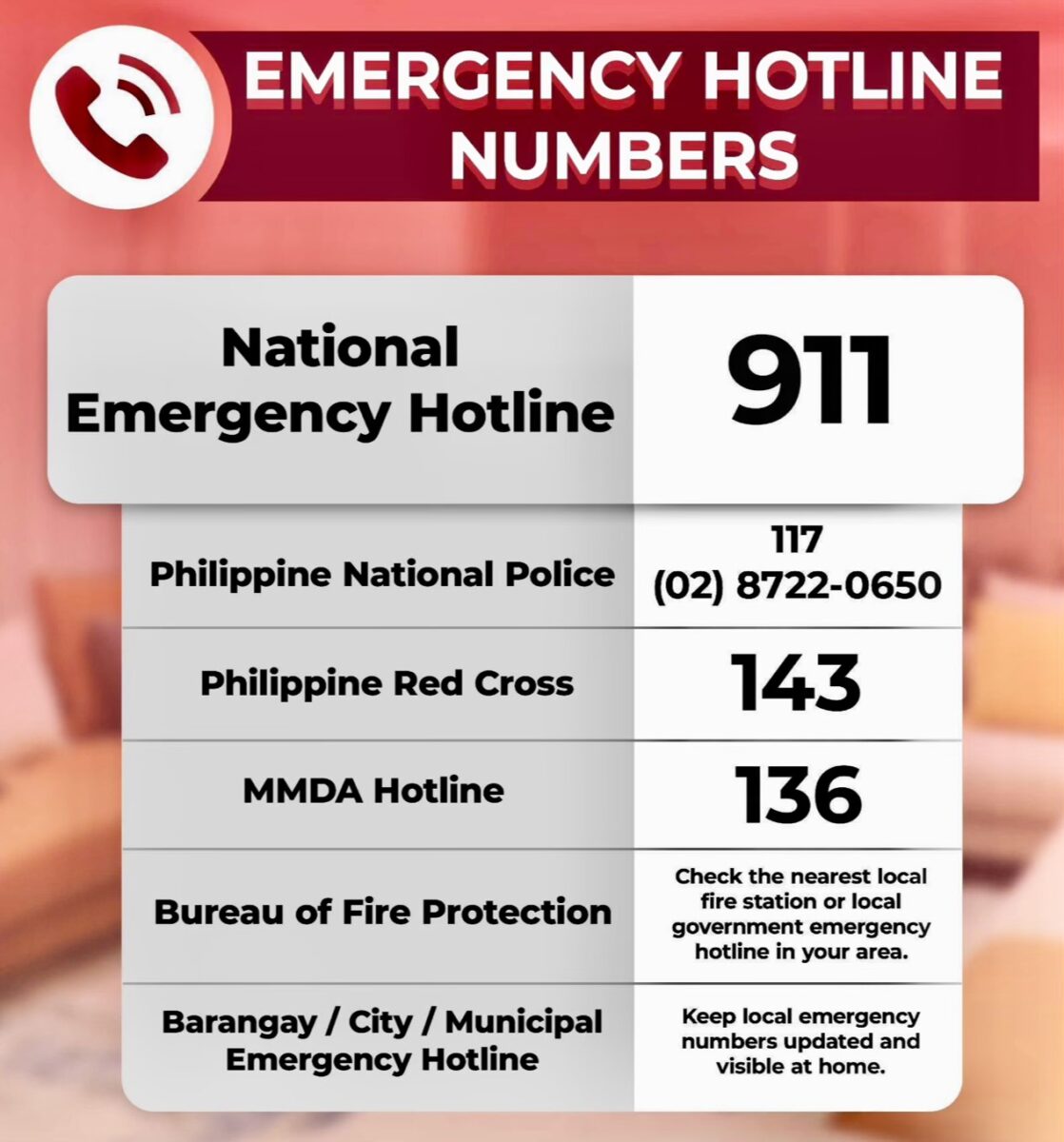
Some of the key emergency numbers Filipino families should keep on hand include:
• National Emergency Hotline – 911
• Philippine National Police – 117 or (02) 8722-0650
• Philippine Red Cross – 143
• MMDA Hotline – 136
• Bureau of Fire Protection – nearest local fire station hotline
• Barangay, City, or Municipal Emergency Hotlines – updated local numbers specific to the community
The growing importance of emergency hotlines is evident in recent figures from the Philippine Information Agency, which reported that the Unified 911 Emergency Hotline received more than 5.2 million calls from January to April 2026. This highlights how many Filipinos rely on emergency communication services when urgent situations arise.
Families can further strengthen their preparedness by educating all household members on how to make emergency calls. Children and senior citizens should know when to dial 911, how to clearly state their name and location, and how to describe the nature of the emergency. Local emergency numbers should also be saved alongside national hotlines, as local responders can often provide faster assistance depending on the situation.
Emergency readiness is not about depending on a single solution. It is about creating multiple ways for families to stay connected, informed, and prepared. By keeping emergency numbers within reach and ensuring reliable communication options are available, Filipino households can build safer homes and gain greater peace of mind, knowing help is only a call away when it matters most.

Loading…