
 Village Connect
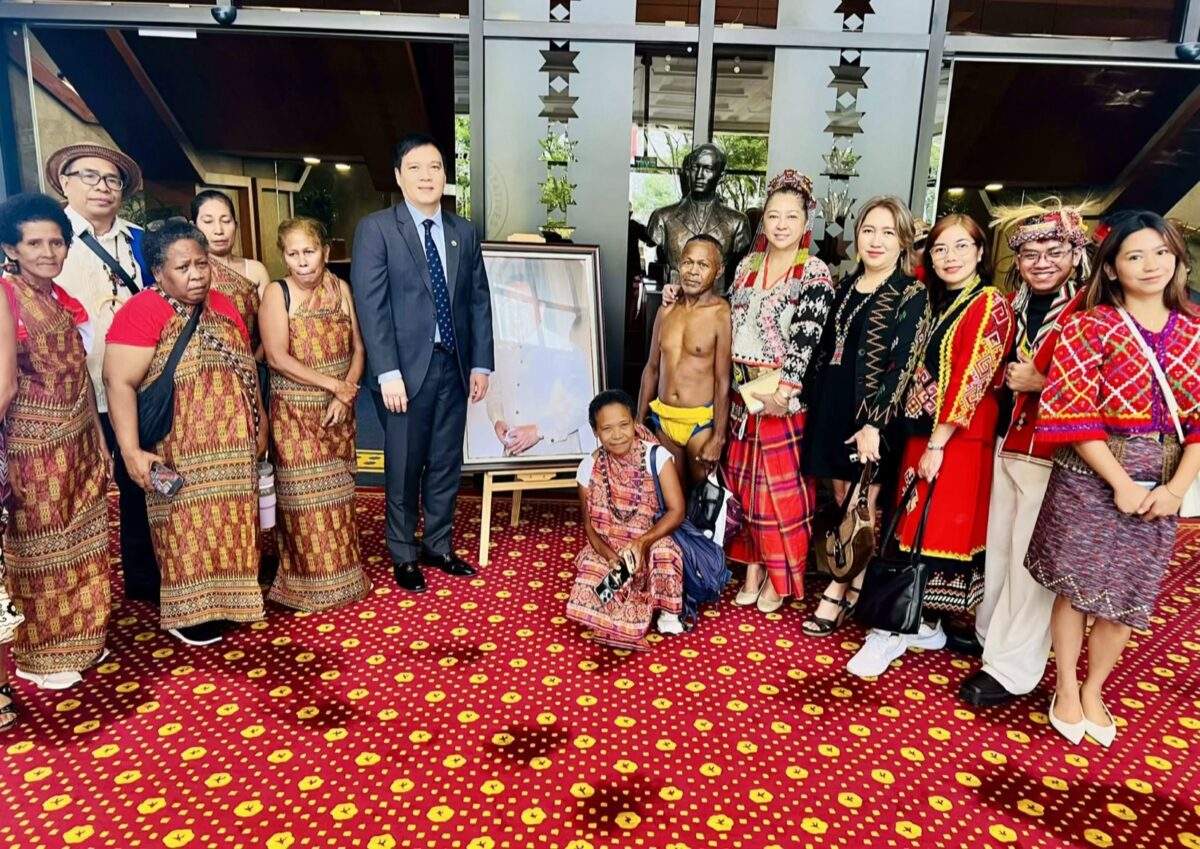
Grief and gratitude filled the halls of the House of Representatives as leaders, elders, and advocates gathered to honor the life and public service of former Speaker Jose de Venecia Jr. Among those present was the Tribal Communities Association of the Philippines (TRICAP), whose National President stood alongside Indigenous elders from various ancestral domains in a solemn necrological service that reflected both remembrance and resolve.
For TRICAP, the moment was deeply personal. De Venecia was remembered not only as a statesman, but as a steadfast ally who helped bring the Indigenous Peoples’ Rights Act (IPRA) of 1997 into reality. At a time when the recognition of ancestral domains, self-governance, and cultural integrity faced strong political uncertainty, his leadership in Congress helped move the historic measure forward. His presence during the law’s signing with then President Fidel V. Ramos became a lasting symbol of solidarity between national leadership and Indigenous communities long seeking justice.
In its tribute, TRICAP described IPRA as the legal embodiment of generations of struggle—proof that the voices of Indigenous Peoples could shape the nation’s laws. The organization recalled how de Venecia stood with communities when their future remained uncertain, helping ensure that their rights were not only discussed, but defended within the country’s highest legislative chamber.
Yet the gathering was not solely about the past. TRICAP emphasized that honoring the former Speaker must inspire renewed commitment to protect what IPRA established. Across the Philippines, ancestral lands continue to face pressure from development and resource extraction, while safeguards such as Free, Prior and Informed Consent remain vulnerable to erosion. These realities, the group said, demand vigilance equal to the courage shown by those who first fought for recognition.
As the ceremony closed, remembrance turned into quiet determination. TRICAP affirmed that the true measure of de Venecia’s legacy lies in continued action—strengthening Indigenous self-governance, preserving cultural heritage, and ensuring that ancestral domains remain protected for future generations. In this shared commitment, his influence endures beyond tribute, living on wherever the rights of Indigenous Peoples are upheld and defended.



Loading…