
 Village Connect
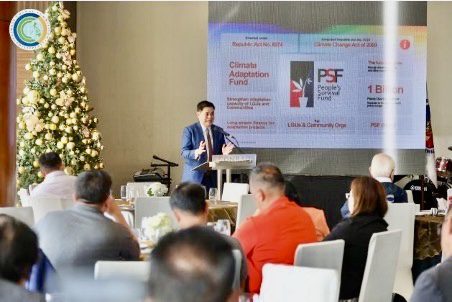
In the evolving landscape of climate governance in the Philippines, provincial leadership is taking on a more decisive role. During the 103rd Year-End National Assembly of the League of Vice Governors of the Philippines (LVGP), the Climate Change Commission (CCC) underscored how Vice Governors stand at a pivotal point where planning, science, and public service converge to shape safer and more resilient communities.
CCC Vice Chairperson and Executive Director Robert E.A. Borje described Vice Governors as leaders positioned at “the critical intersection where plans meet priorities, where evidence meets action, and where strategy becomes alignment across the entire province.” From this vantage point, they are uniquely equipped to guide initiatives that protect lives, preserve livelihoods, and secure long-term provincial development in the face of intensifying climate risks.

Central to this mission is the National Adaptation Plan (NAP), developed under the administration of President Ferdinand R. Marcos Jr. The NAP provides a science-based roadmap that enables local governments to identify vulnerabilities, anticipate hazards, and design adaptation strategies suited to their specific conditions. Borje emphasized that Local Climate Change Action Plans must be firmly anchored in the NAP to ensure that provincial responses remain evidence-driven, measurable, and aligned with national priorities—an approach that ultimately strengthens risk governance across all levels.
Financing resilience, he noted, is becoming more attainable through the People’s Survival Fund (PSF). Between 2023 and 2025, the PSF Board accelerated approvals of adaptation projects and Project Development Grants, significantly improving fund utilization. By May 2024, the original ₱1-billion allocation had been fully committed, even surpassing the amount by more than ₱321 million. With an additional ₱1 billion appropriated under the 2025 General Appropriations Act, the PSF portfolio expanded to include 15 projects and nine development grants valued at roughly ₱1.4 billion—signaling stronger national support for community-level resilience.
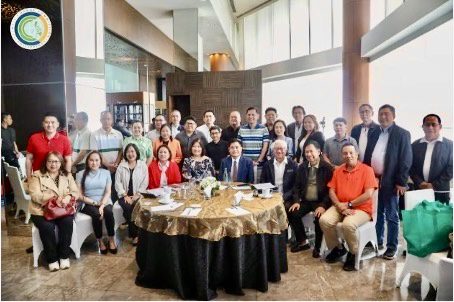
Still, Borje acknowledged that improving access and implementation support for local governments remains essential. The CCC continues to work closely with the Department of Finance and PSF Board partners to refine application processes and strengthen technical assistance, ensuring that more provinces can translate climate plans into funded, on-the-ground action.
Beyond policies and financing, the message to Vice Governors was clear: resilience demands collaboration. A whole-of-government and whole-of-society approach is necessary to keep systems responsive to community needs while advancing sustainable development.
As a national platform for coordination and knowledge-sharing, the LVGP plays a crucial role in uniting provincial leaders around this shared responsibility. Through strengthened governance, informed planning, and sustained cooperation, Vice Governors are helping chart a more climate-resilient future for the nation—one province at a time.


Loading…