
 Village Connect
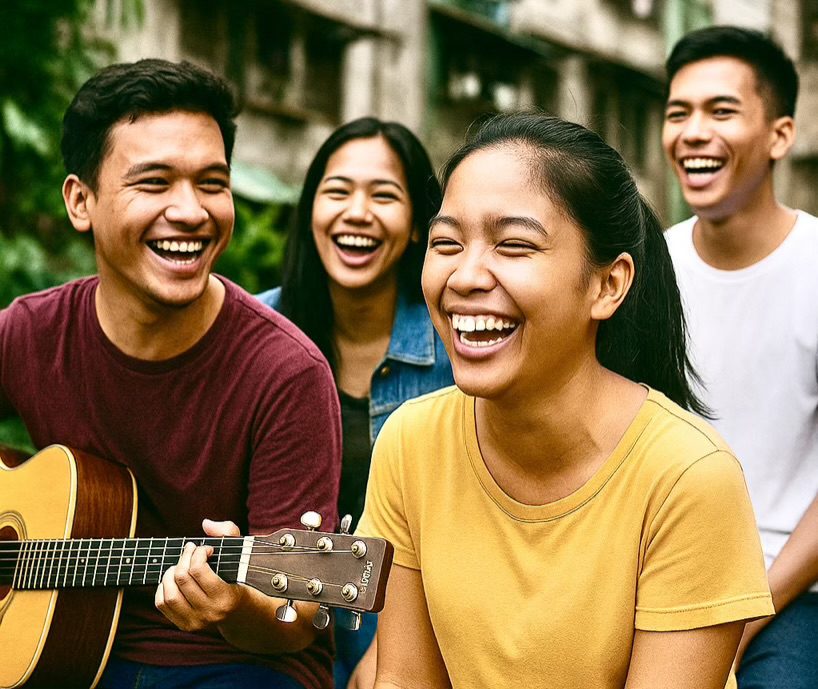
Life in the Philippines isn’t always easy—prices are up, bills keep coming, and uncertainty hangs in the air. But somehow, Filipinos still manage to smile. While much of the world equates happiness with wealth or comfort, we’ve found ways to feel joy even with little in our pockets. Where others might say, “You can’t afford to be happy,” we simply say, “Watch us.”
Joy, to Filipinos, isn’t something you purchase. It’s something you create, even from nothing. When there’s no electricity, a guitar and some good company become our entertainment. When basic goods spike in price, we turn our frustrations into viral memes and shared laughter. When floods come, we float on makeshift rafts, holding a beer and a Bluetooth speaker like it’s just another weekend adventure.
Every day, people find joy in the smallest things—many of which cost nothing or close to it. A classic Pinoy movie that still hits right in the feels. A teleserye cliffhanger that keeps you coming back. A late-night budol find online. Even sending a ₱1 load to say “ingat ka” to your crush becomes a source of lightness in the day.

This is how we practice joy in recession. It’s accessible, unpretentious, and deeply rooted in the rhythms of our daily lives. It doesn’t need a grand occasion. It shows up in karaoke sessions, inside jokes, and shared struggles turned into humor.
Filipinos spend more time online than any other nationality—not because we’re escaping life, but because we’re making connections. It’s where we gather, cheer each other on, and find solidarity in our challenges. A single post with a caption like “Kapit lang” or “Sana all” carries both comfort and camaraderie. We speak our truths through humor, even when things hurt.
Psychologists say this isn’t escapism—it’s resilience. We gravitate to low-cost digital pleasures like TikTok, livestreams, and casual mobile games because they give us an anchor. These aren’t mindless distractions. They’re how we process pain, build community, and recharge our spirits, one laugh or thrill at a time.
This response to crisis isn’t unique to us. Historically, culture blooms in adversity. Hollywood emerged from the Great Depression. Anime rose after war-torn Japan. K-pop thrived during economic downturns. These movements weren’t born in comfort—they were born from the need to feel something brighter amid the dark.
In the Philippines, when tragedy strikes, creativity erupts. From music to memes, we express ourselves loudly and proudly. These acts of joy in the middle of difficulty aren’t acts of denial—they’re survival. They say, “I’m still here. And I’m still me.” Whether it’s a livestreamed karaoke or a ten-peso online game, these little joys matter deeply.
So when people wonder why Filipinos lean into low-cost, high-fun entertainment, the better question might be—how could we not? These things remind us we’re alive. They remind us we deserve to feel good, even for a moment. In between shifts, in long commutes, or during a brownout—joy always finds a way.
To the world, we might seem too soft in hard times. But that softness is our strength. We keep playing, laughing, loving—because that’s who we are. We don’t just survive the storms. We sing through them. And when someone says, “You can’t afford happiness,” we smile and say, “Kaya pa naman.”


Loading…